Shrimp, lime and chile in a quick, fresh and intense preparation: one of northwestern Mexico’s most recognizable flavors.
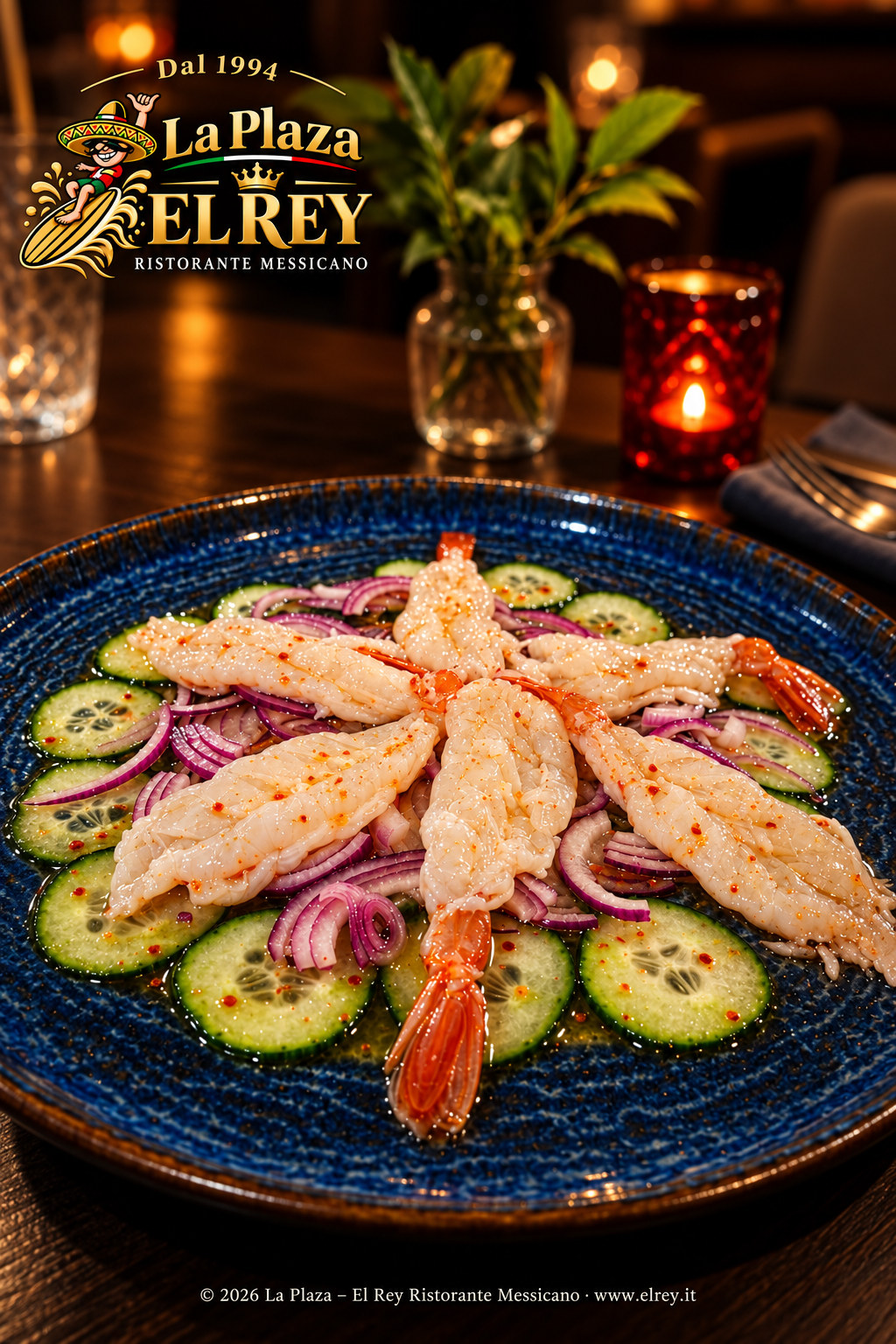
Aguachile de Camarón is typical of the Mexican Pacific, particularly Sinaloa. Shrimp is dressed with lime and chile shortly before serving, often accompanied by cucumber and onion.
Mexican sources link aguachile to the western coast and northwest of the country, particularly Sinaloa.
A widely circulated account traces the original idea to the mountainous areas of Sinaloa, where water and chiltepín accompanied meat dishes; over time shrimp became the main ingredient in coastal areas.
The most important modern characteristic is immediacy: acidity and heat are added shortly before serving to preserve texture and freshness.
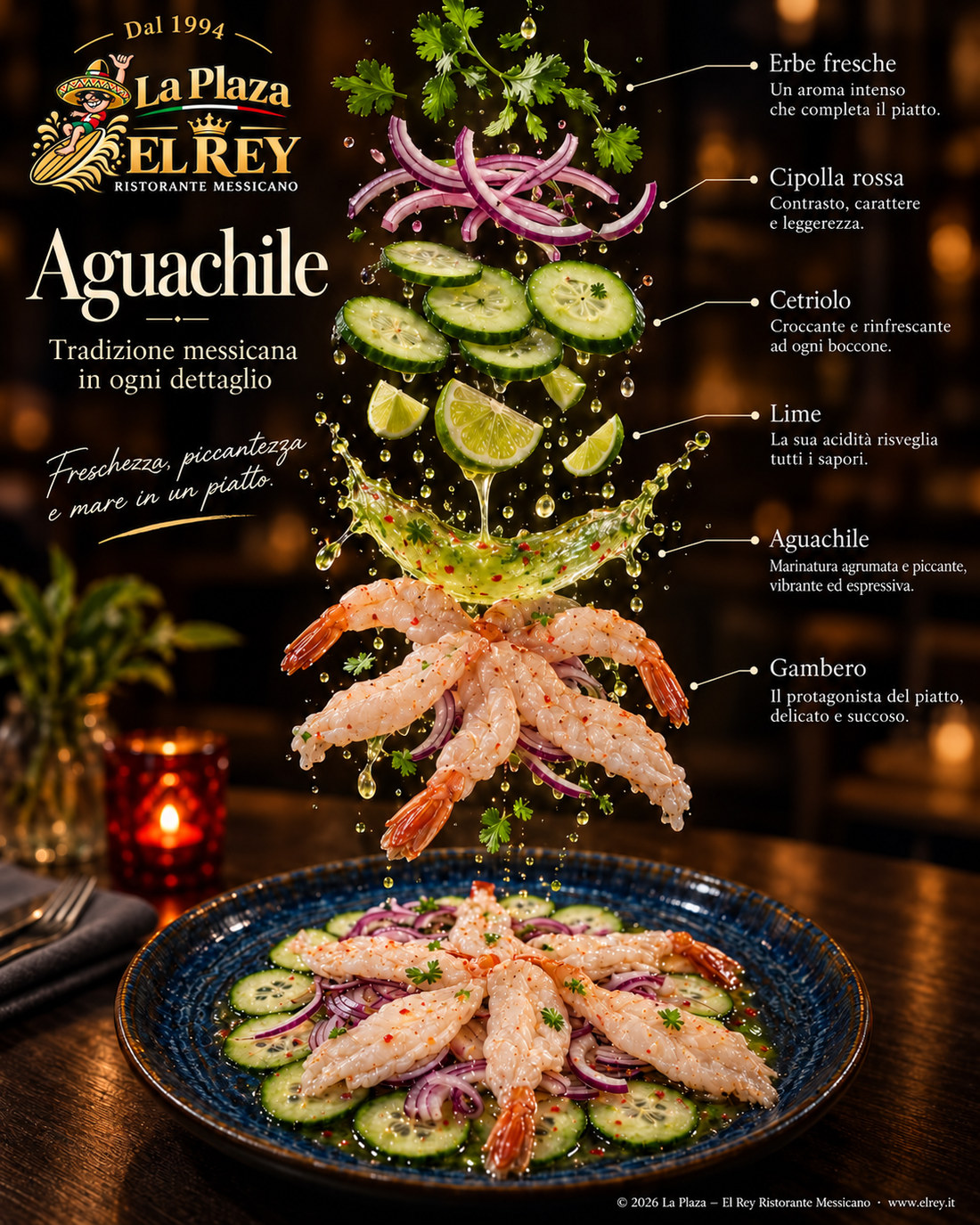
Cleaned shrimp prepared for very brief dressing.
Acidity defines the fresh profile of the dish.
Chiltepín, serrano or other variations provide character and heat.
Fresh, crisp elements very common in modern versions.
This section describes the dish in general cultural terms. For ingredients, allergens and procedures actually used at El Rey, refer to the restaurant's current documentation.
The Anatomy illustration identifies the main elements of the dish.
© 2026 La Plaza – El Rey Ristorante Messicano · www.elrey.it
Green chile, lime, often cilantro and sometimes avocado.
Red chiles or deeper sauces, with different heat and aromatic profiles.
Contemporary interpretations with toasted ingredients or dark sauces.
In the dish photographed for the Academy, El Rey uses shrimp, lime, green chile, cilantro and cucumber. Refer to the current kitchen specification for exact composition, availability and allergens.
For availability, actual composition and allergens, consult the digital menu or ask our staff.
No. They are related families, but aguachile tends to be more immediate and spicy, with very short dressing times.
Chiltepín is closely associated with Sinaloa’s tradition; serrano versions are also widespread.
Quick serving preserves the shrimp’s texture and the contrast between acidity, freshness and heat.
No. Acidity changes protein texture but does not replace the food safety procedures required for eating raw seafood.
The national mapping remains on GastroMEX, separate from the Academy's cultural exploration.
Texts and editorial approach: Guido Balloni · La Plaza – El Rey Ristorante Messicano.