Stuffed poblano chile, walnut nogada, pomegranate and parsley: seasonal cooking, memories of Puebla and Mexico’s colors.
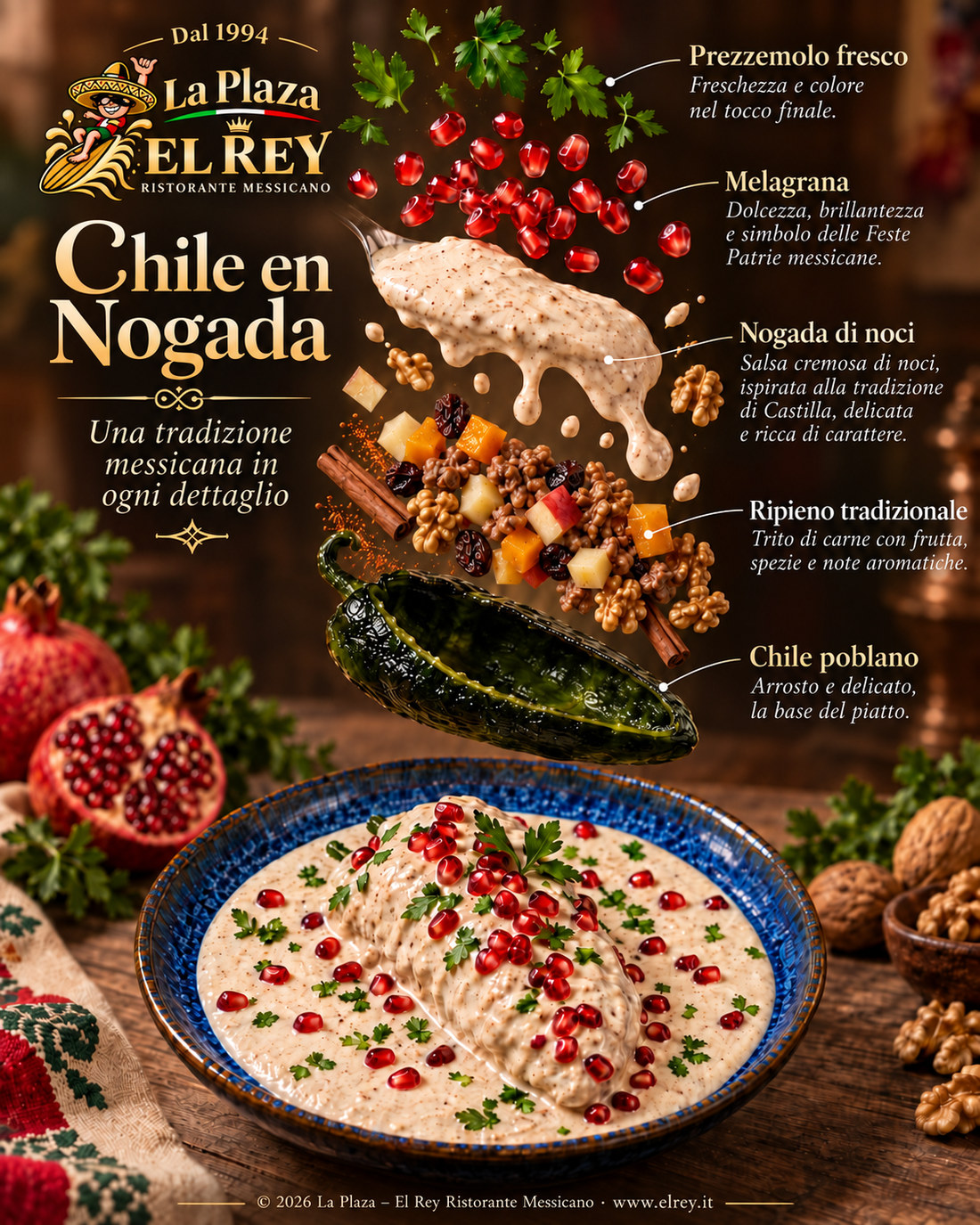
Chile en Nogada is an emblematic dish of Puebla: a poblano chile stuffed with picadillo, covered with walnut sauce and finished with pomegranate and parsley. It is associated with the Fiestas Patrias and the walnut and pomegranate season.
The best-known story links the dish to 1821 and the Augustinian nuns of the Santa Mónica convent, who are said to have prepared it in honor of Agustín de Iturbide. It is a deeply rooted tradition, but not proven in every detail.
Stuffed chiles and walnut sauces are documented before the patriotic version. It is therefore more accurate to describe a recipe that evolved over time in Puebla’s kitchens than a single invention.
The green of the chile and parsley, the white of the nogada and the red of the pomegranate have become part of the national imagination. The traditional season is mainly July through September.
Roasted, carefully peeled and kept whole to hold the filling.
Meat, seasonal fruit, dried fruit and nuts, and spices create the sweet-savory balance.
Creamy walnut sauce; the walnut is central to Puebla’s tradition.
Freshness, color and contrast complete the presentation.
This section describes the dish in general cultural terms. For ingredients, allergens and procedures actually used at El Rey, refer to the restaurant's current documentation.
The Anatomy illustration identifies the main elements of the dish.
© 2026 La Plaza – El Rey Ristorante Messicano · www.elrey.it
The chile is coated with egg and fried before being covered with sauce.
The poblano flavor comes through more directly and the dish is lighter.
Fruit, cheese, sherry and the sweet-savory balance vary from kitchen to kitchen.
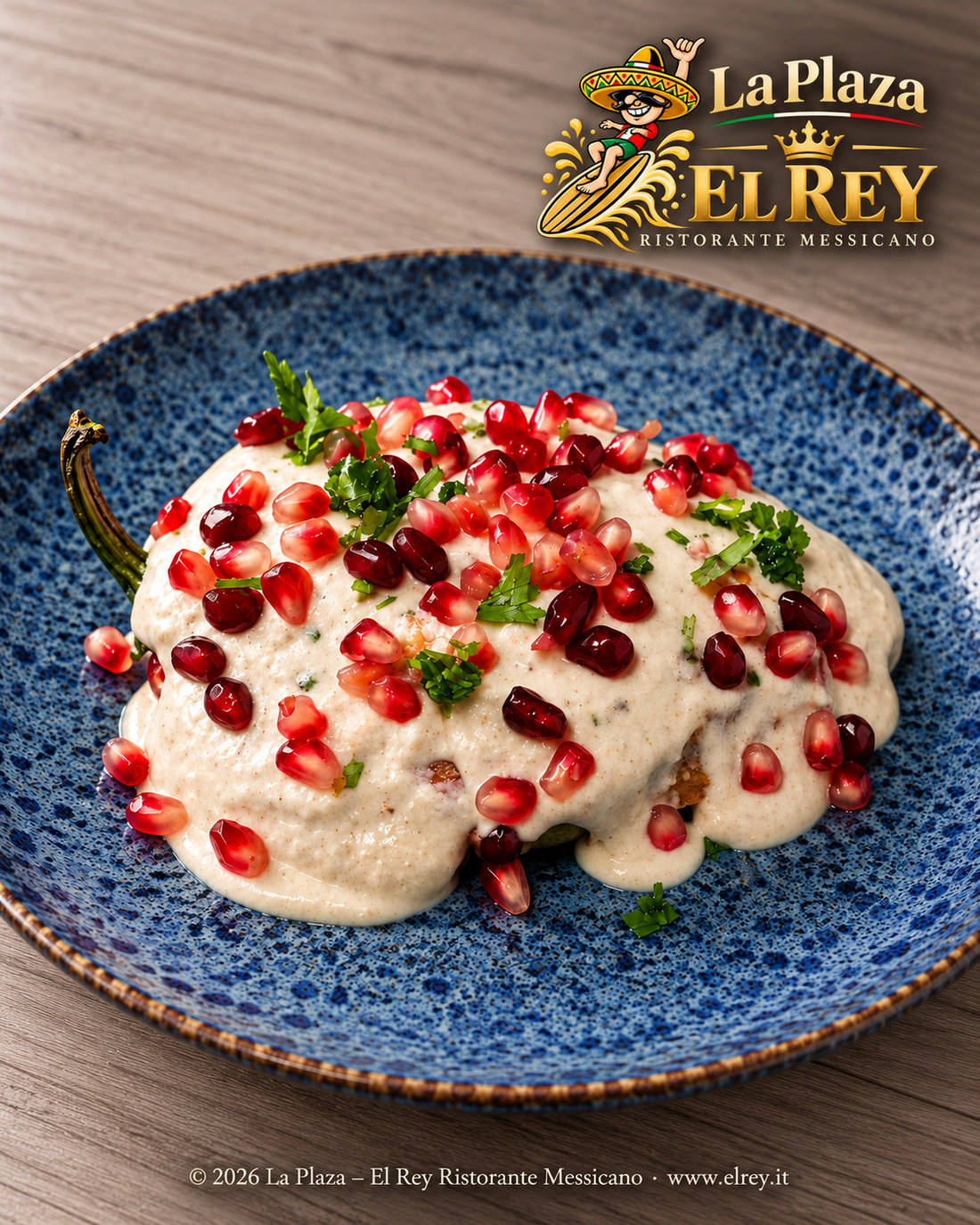
The Academy photograph shows El Rey’s preparation with a generous coating of nogada, pomegranate and fresh greens on the speckled blue plate. For actual ingredients, proportions and allergens, refer to the current kitchen specification.
For availability, actual composition and allergens, consult the digital menu or ask our staff.
It means a walnut-based sauce. The Puebla dish often uses walnuts known as nuez de Castilla.
Green, white and red recall the colors associated with the Army of the Three Guarantees and later the Mexican flag.
Poblanos are usually moderately spicy, but heat naturally varies from chile to chile.
Yes. In Mexico it is particularly associated with July through September.
Walnuts and dairy are common; eggs or sherry may be present depending on the recipe. Consult El Rey’s current allergen information.
The national mapping remains on GastroMEX, separate from the Academy's cultural exploration.
Texts and editorial approach: Guido Balloni · La Plaza – El Rey Ristorante Messicano.