Pork, achiote, citrus and slow cooking: an emblematic Yucatecan preparation historically linked to the pib.
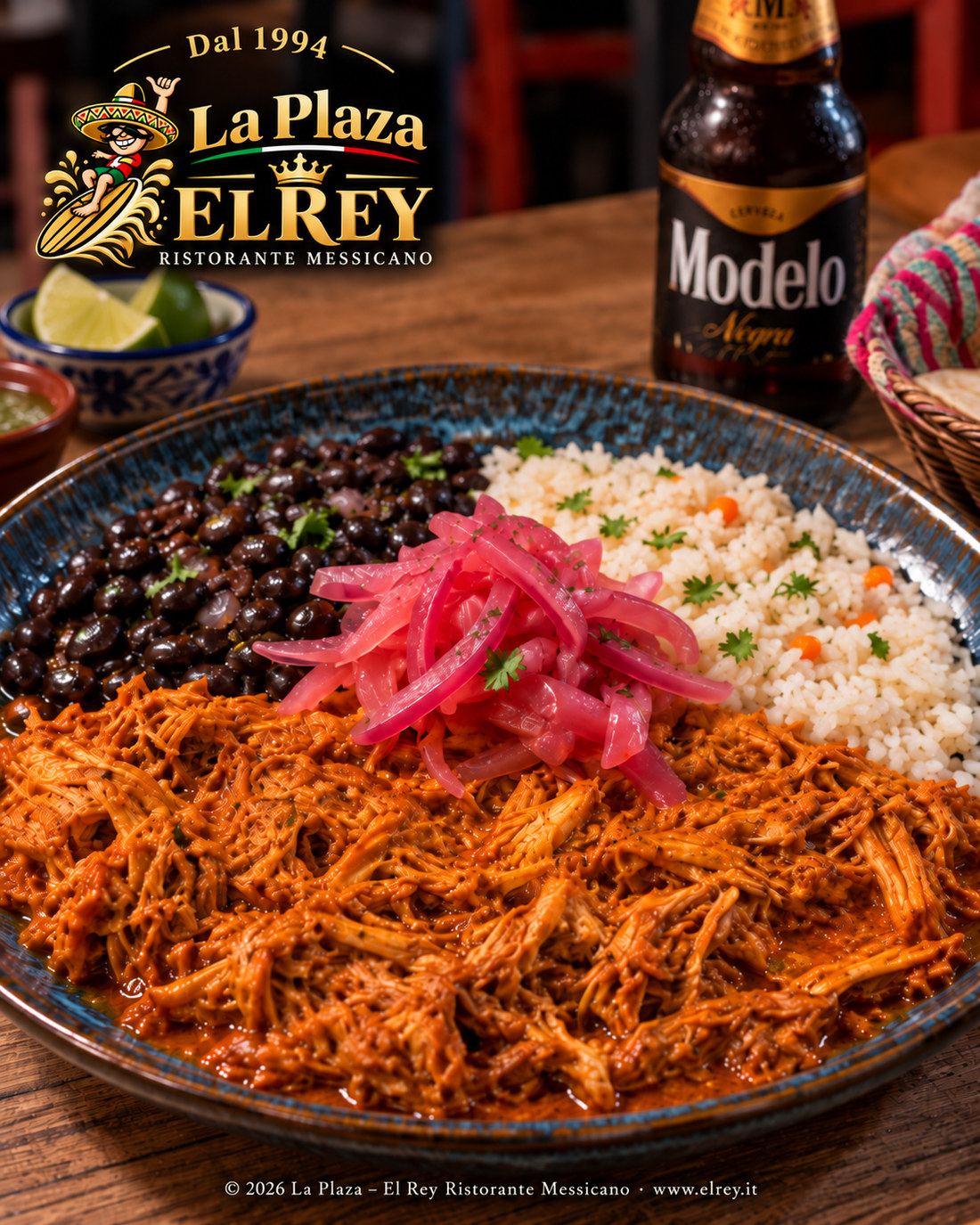
Cochinita Pibil is a Yucatecan preparation of pork marinated with achiote, citrus and spices. Pibil refers to the pib, traditional underground cooking; many kitchens now use modern ovens while retaining the principle of slow cooking in a wrapping.
The term pibil derives from the technique associated with the pib, the traditional Maya earth oven. It is important to distinguish this technical origin from the dish’s contemporary form.
Pork arrived after the Spanish conquest and was integrated with local ingredients and methods. Today’s cochinita is therefore a clear example of historical layering.
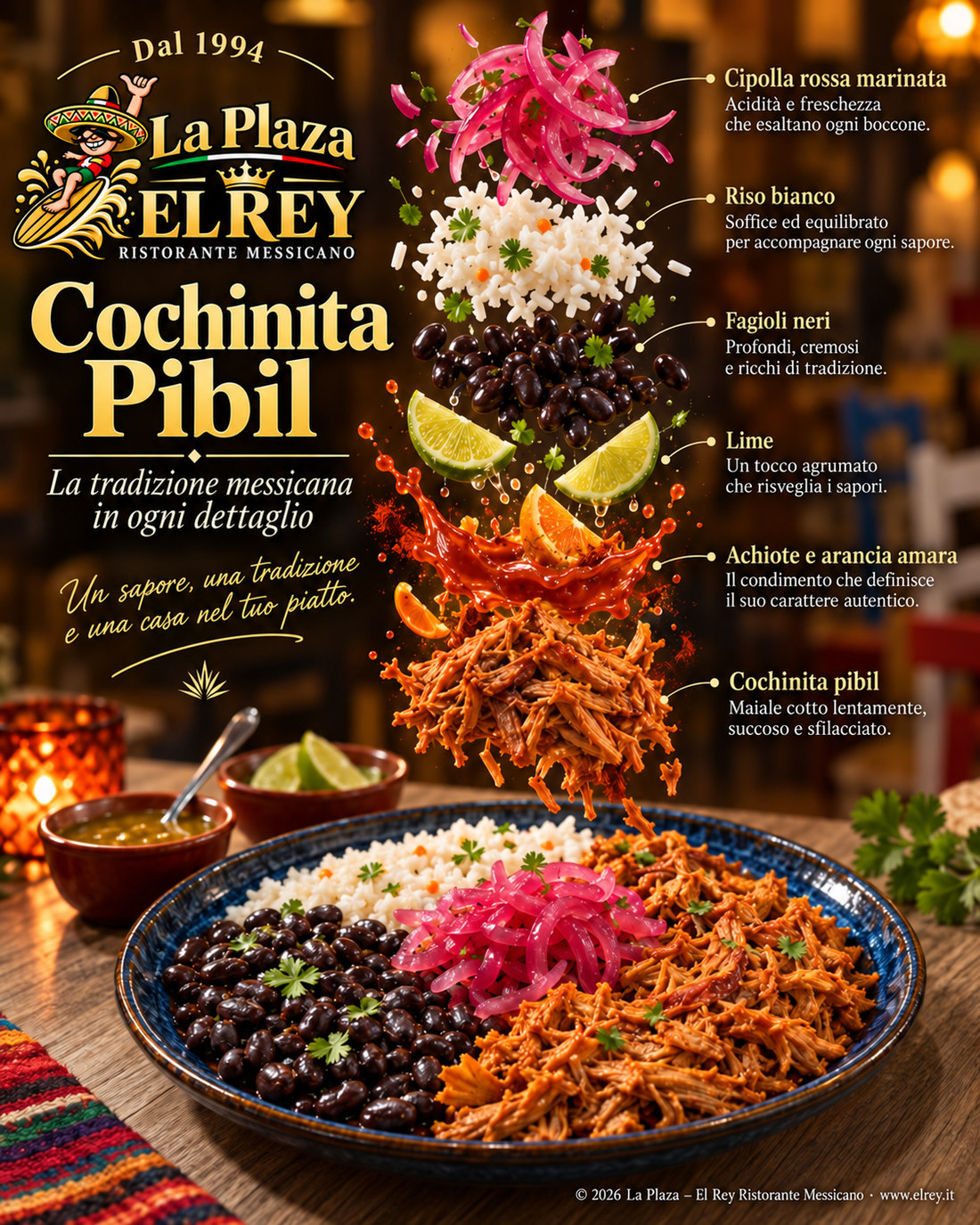
Achiote, sour orange, spices, banana leaves, red onion and habanero form the most recognizable language of the Yucatecan dish today.
Long cooking should make it tender and easy to shred.
Color, aroma and identity of the marinade.
Sour orange is traditional; outside Yucatán the acidic balance is often recreated with other citrus fruits.
Classic, fresh and punchy accompaniments.
This section describes the dish in general cultural terms. For ingredients, allergens and procedures actually used at El Rey, refer to the restaurant's current documentation.
The Anatomy illustration identifies the main elements of the dish.
© 2026 La Plaza – El Rey Ristorante Messicano · www.elrey.it
Served in a corn tortilla with red onion and salsa.
Used as a topping for one of Yucatán’s most representative antojitos.
An oven or other equipment can replace the pib, provided the page distinguishes the adaptation from the historical method.
El Rey documents pork marinated with orange and achiote, slow-cooked and served with red onion; the takeaway page also describes cooking in banana leaves. Availability and allergens must be checked against the current menu and kitchen specification.
For availability, actual composition and allergens, consult the digital menu or ask our staff.
It refers to cooking in the pib, Yucatán’s traditional earth oven.
No. The technique has Maya roots, but pork was introduced by Europeans.
For a historical reconstruction, yes; modern kitchens use oven adaptations.
No. Habanero can be served separately so diners can adjust the amount.
The national mapping remains on GastroMEX, separate from the Academy's cultural exploration.
Texts and editorial approach: Guido Balloni · La Plaza – El Rey Ristorante Messicano.