Tomato and chile broth, crispy tortilla, avocado and garnishes: a Mexican soup built on contrasting textures.
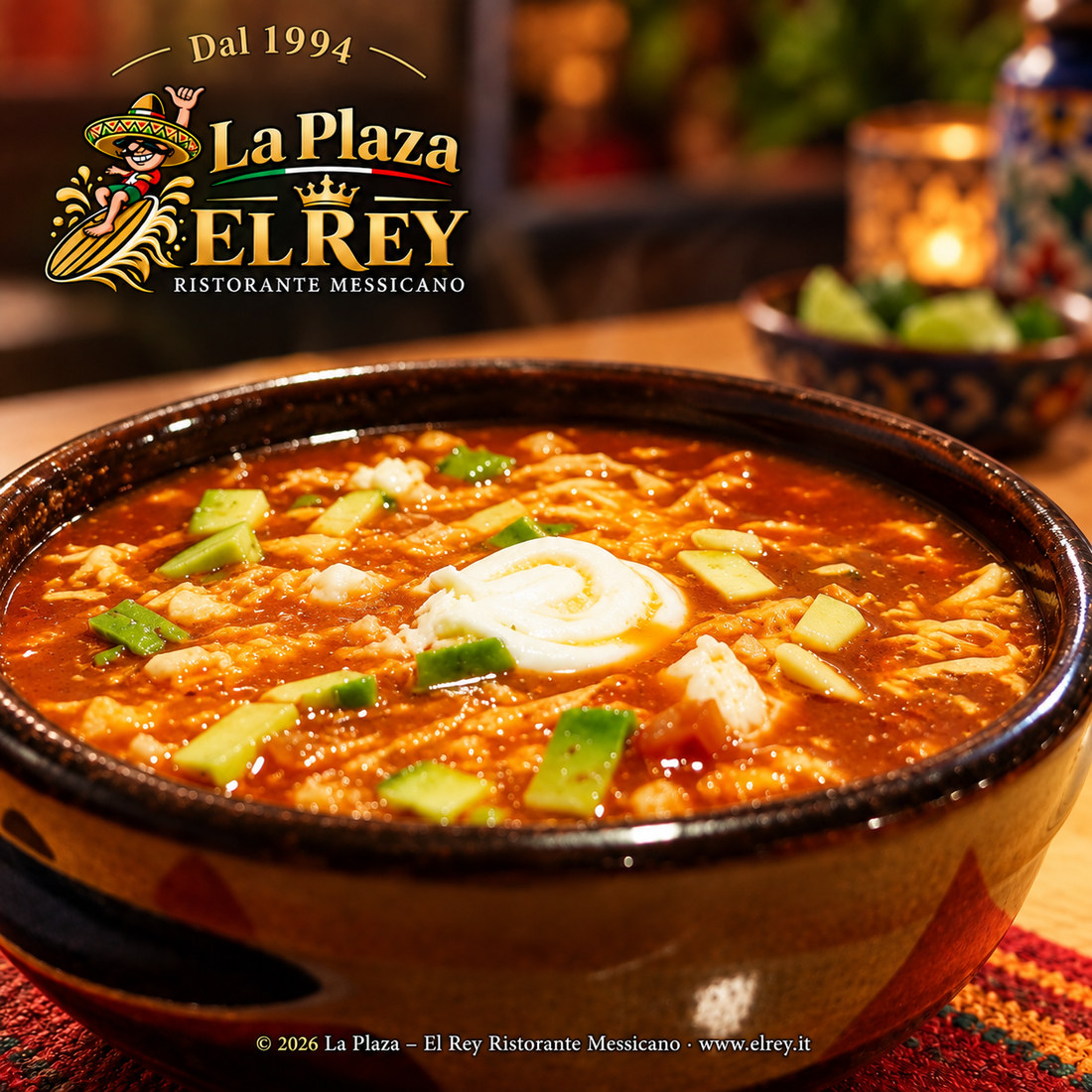
Sopa Azteca and Sopa de Tortilla refer to the same broad family of dishes. The traditional base combines tomato, garlic, onion, chile and epazote; fried or toasted tortillas are added at serving with garnishes such as avocado, cheese and cream.
Mexican institutional sources associate Sopa de Tortilla with Tlaxcala and emphasize its connection with corn, a central ingredient of Mesoamerican cultures.
The name Sopa Azteca is widespread today, but does not mean the contemporary recipe comes directly from an unchanged Aztec cuisine: it reflects historical layers and ingredients from different periods.
The dish’s strength lies in contrast: hot aromatic caldillo, crispy tortilla and soft or fresh garnishes.
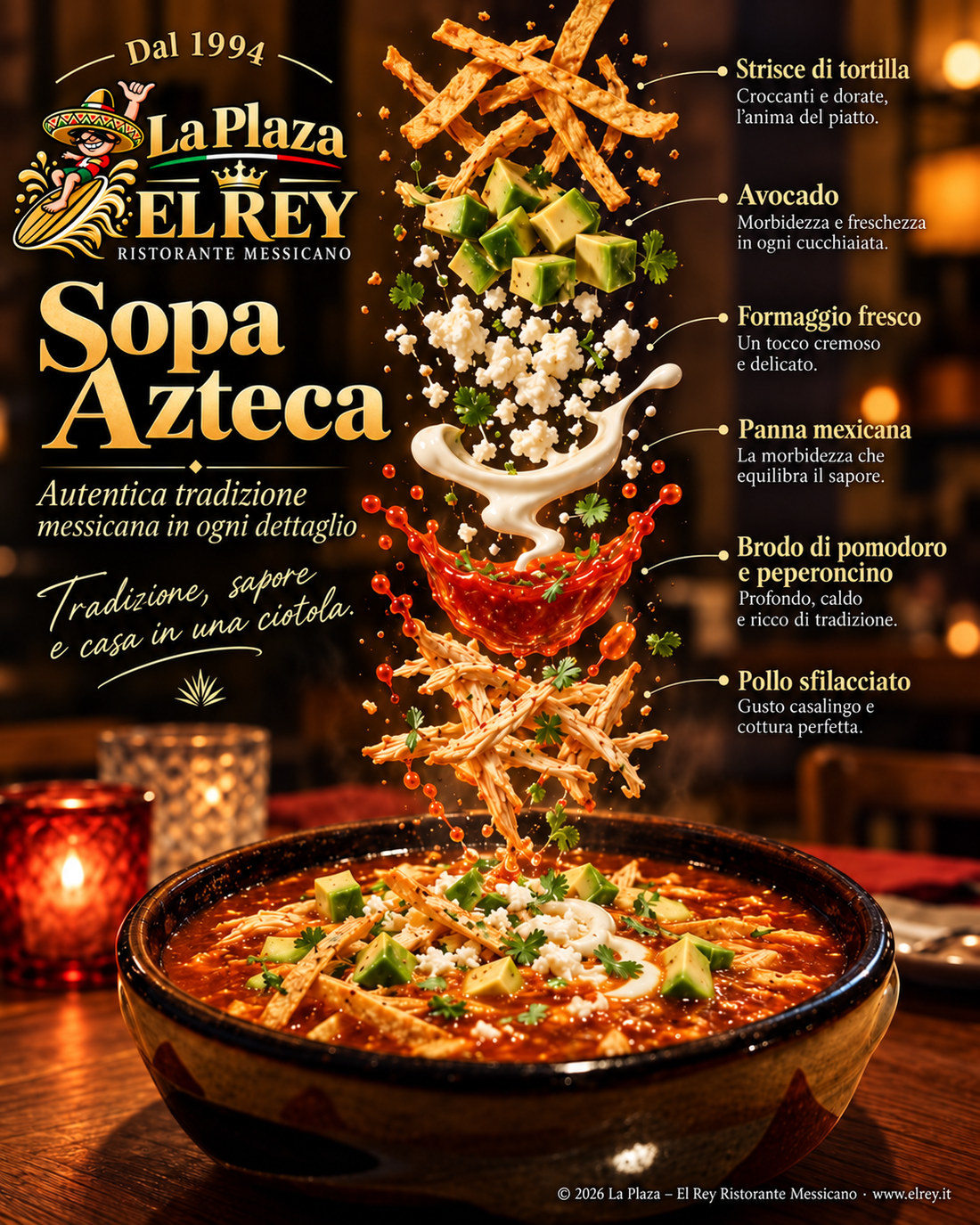
Tomato, garlic and onion form the base.
Pasilla chile is closely associated with the dish; other interpretations exist.
Fried or toasted corn tortilla strips added at serving.
Avocado, cheese, cream and herbs change texture and temperature.
This section describes the dish in general cultural terms. For ingredients, allergens and procedures actually used at El Rey, refer to the restaurant's current documentation.
The Anatomy illustration identifies the main elements of the dish.
© 2026 La Plaza – El Rey Ristorante Messicano · www.elrey.it
Classic, aromatic and slightly smoky profile.
A smokier, spicier version.
Avocado, cream, cheeses, chicharrón and other elements may vary by kitchen.
El Rey’s version is presented as a hot tomato and chile preparation finished with crispy tortilla, avocado and cheese. Actual composition and allergens must always be checked against the current specification.
For availability, actual composition and allergens, consult the digital menu or ask our staff.
Both names are commonly used for the same family of dishes.
The contemporary dish has roots in corn and Mexican cuisine, but the name does not prove an identical recipe has survived since pre-Hispanic times.
To preserve the contrast between crunch and broth.
No. Heat depends on the chile and the quantity used.
The national mapping remains on GastroMEX, separate from the Academy's cultural exploration.
Texts and editorial approach: Guido Balloni · La Plaza – El Rey Ristorante Messicano.